
 0
0




Leave a Reply
You must be logged in to post a comment.

Double Stuff Oreo Lab Answer Key provides a delightful‚ hands-on exploration of scientific principles‚ blending tasty treats with rigorous data analysis and insightful conclusions.
This Double Stuff Oreo Lab is a captivating educational experience‚ skillfully merging the allure of a popular snack with fundamental scientific investigation. It’s designed to engage students of diverse ages in practical learning‚ fostering a deeper understanding of measurement and comparative analysis. The core premise revolves around scrutinizing the actual quantity of cream filling within Double Stuf Oreos‚ contrasting it against the expectations set by the product’s name and marketing.
Students actively participate in a hands-on experiment‚ meticulously measuring and recording data. This process not only reinforces scientific methodology but also encourages critical thinking as they evaluate whether the “double” claim holds true. The lab’s accessibility and inherent fun factor make it an ideal tool for introducing scientific concepts in an approachable and memorable way‚ sparking curiosity and a love for experimentation.
The central inquiry driving this Double Stuff Oreo Lab is deceptively simple: do Double Stuf Oreos genuinely contain twice the amount of cream filling compared to their Original counterparts? This question serves as a springboard for a rigorous scientific investigation‚ prompting students to move beyond assumptions and rely on empirical evidence;
The lab challenges the notion of marketing claims‚ encouraging a skeptical yet analytical approach. Students formulate a hypothesis‚ design an experiment to test it‚ and meticulously collect data to draw a conclusion. Through precise measurements and calculations‚ they determine if the increased filling in Double Stuf Oreos aligns with the “double” designation‚ fostering a critical understanding of product labeling and quantitative analysis.

This Double Stuff Oreo Lab utilizes readily available materials – Oreos (both varieties)‚ a precise scale‚ and tools for careful separation of cookie components.
To successfully conduct the Double Stuff Oreo Lab‚ several key materials are essential for accurate data collection and analysis. First‚ a sufficient quantity of both Double Stuffed Oreos and regular Oreos is needed – ideally‚ at least ten of each variety to ensure reliable averages.
A high-precision digital scale‚ capable of measuring in grams to at least one decimal place‚ is crucial for determining the mass of each cookie component. Small‚ disposable weighing containers or weighing paper will help contain crumbs and facilitate accurate measurements.
Furthermore‚ tools for carefully separating the cookie wafers from the cream filling are required; plastic knives or dental tools work well to minimize damage. Finally‚ a data table (either pre-printed or created digitally) and a calculator are necessary for organizing and analyzing the collected mass measurements.
The Double Stuff Oreo Lab follows a structured procedure for accurate results. Begin by carefully weighing and recording the mass of several Double Stuffed Oreos and regular Oreos individually. Next‚ gently separate each cookie into its component parts: the chocolate wafers and the cream filling.
Weigh each cookie wafer separately‚ recording the mass for each. Then‚ carefully weigh the cream filling from each cookie‚ ensuring no crumbs are lost. Repeat this process for all cookies in your sample.
Organize your data in a table‚ noting the mass of each Oreo‚ wafer‚ and filling. Finally‚ calculate the average mass for each component type – Double Stuffed versus regular – to determine if the “Double Stuff” claim holds true.
To initiate the experiment‚ gather a representative sample of Double Stuffed Oreos. Utilizing a precise digital scale‚ meticulously measure the mass of each individual Oreo. It’s crucial to ensure the scale is properly calibrated and placed on a stable surface to minimize measurement errors.
Record each measurement in a data table‚ noting the Oreo number and its corresponding mass in grams. Repeat this process for a minimum of ten Double Stuffed Oreos to obtain a statistically significant sample size.
Avoid handling the Oreos excessively to prevent any transfer of oils or residue that could affect the mass. This initial step establishes the baseline mass for the Double Stuffed variety‚ against which the regular Oreos will be compared.

Following the measurement of Double Stuffed Oreos‚ repeat the same procedure with a sample of regular Oreos. Employing the same digital scale – ensuring it remains calibrated – carefully measure the mass of each individual regular Oreo. Consistency in methodology is paramount for accurate comparison.
Record each measurement in a separate data table‚ clearly labeling it for regular Oreos‚ and noting the Oreo number alongside its mass in grams. Again‚ a sample size of at least ten Oreos is recommended to enhance the reliability of the results.
Maintain the same precautions as before: minimal handling and a stable scale surface. This step provides the control group mass‚ essential for determining if the “Double Stuf” designation truly corresponds to a significant mass increase.
This is arguably the most delicate step. Carefully disassemble each Oreo – both Double Stuf and regular – to separate the chocolate wafers from the cream filling. A flat‚ clean surface is crucial to minimize cream loss during separation. Gentle pressure‚ applied evenly‚ is recommended to avoid crumbling the wafers.
Avoid using tools that might damage the components or introduce extraneous mass. The goal is to isolate the cream filling as completely as possible. Any cream remaining adhered to the wafers should be carefully scraped off and added to the filling pile for that specific Oreo.
Record any difficulties encountered during separation‚ as this could be a source of error; Maintaining meticulous technique ensures the accuracy of subsequent mass measurements.
After carefully separating the cream filling‚ accurately measure the mass of each individual cookie wafer. Use a precise digital scale‚ ensuring it’s zeroed before each measurement. Record the mass of each wafer – both from the Double Stuf and regular Oreos – in your data table.
It’s important to measure both wafers from each Oreo‚ as slight variations in mass can occur. This meticulous approach enhances the reliability of your results. Be mindful of any residual cream clinging to the wafers‚ as this will affect the accuracy of the measurement.
Repeat this process for all Oreos in your sample‚ maintaining consistent technique throughout. Accurate wafer mass determination is crucial for calculating the filling mass.
To determine the mass of the cream filling‚ subtract the mass of the cookie wafer (obtained in Step 4) from the total mass of the Oreo (measured in Step 1). This calculation will yield the mass of the cream filling for each individual Oreo.
Repeat this subtraction for both wafers of each Oreo‚ and record the results in your data table. Ensure consistent units (grams) throughout your calculations. This step is pivotal in comparing the filling mass between Double Stuf and regular Oreos.
Carefully review your calculations to minimize errors. Accurate filling mass determination is essential for drawing valid conclusions about the “Double Stuf” claim.
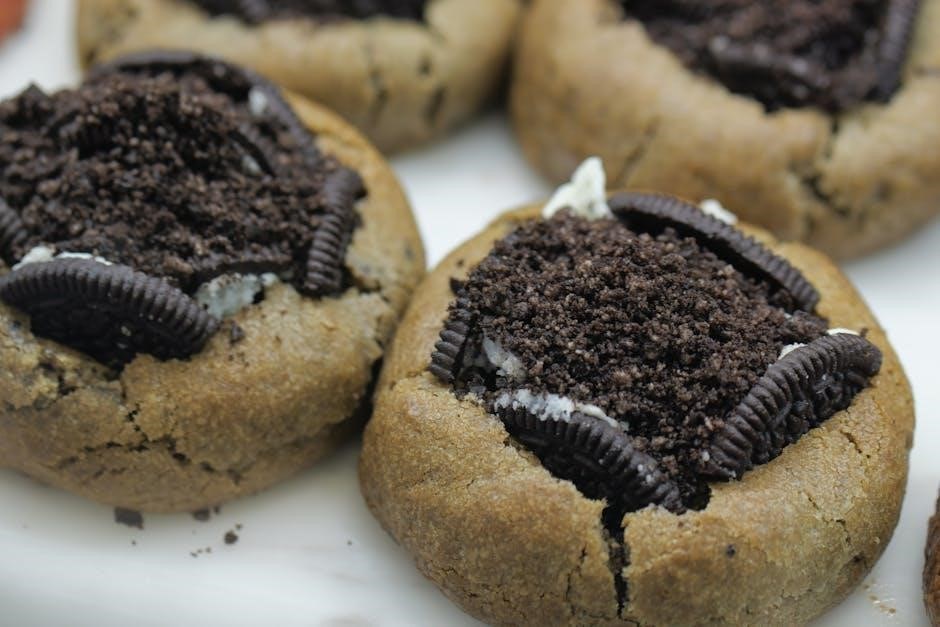
Meticulous data recording and analysis are crucial for validating or refuting the “Double Stuf” claim‚ utilizing precise measurements and statistical comparisons.
Creating a comprehensive data table is fundamental to the Double Stuff Oreo Lab. This table should systematically record the mass measurements of both Double Stuffed and regular Oreos‚ allowing for clear comparisons. Columns should include individual Oreo number‚ type (Double Stuffed or Regular)‚ total mass‚ cookie wafer mass‚ and calculated cream filling mass.
Multiple trials (at least five per cookie type) are recommended to enhance data reliability. The table should also incorporate units (grams) for all mass measurements. A well-organized data table facilitates accurate calculations of averages and subsequent statistical analysis‚ ultimately supporting a data-driven conclusion regarding the “Double Stuf” claim. This structured approach mirrors professional scientific practices.
Consider including a column for observations‚ noting any anomalies during the separation process.
Determining average weights is crucial for comparing Double Stuffed and regular Oreos. Sum the total mass measurements for each cookie type and divide by the number of samples. Based on provided data‚ the average weight of a Double Stuffed Oreo is 15.1g‚ while a regular Oreo averages 11.5g.
These averages establish a baseline for further analysis. Similarly‚ calculate the average wafer weight for each type – 4.2g for Double Stuffed and 4.0g for regular. These calculations are foundational to determining if the cream filling truly constitutes “double” the amount.
Accurate averaging minimizes the impact of individual measurement errors‚ strengthening the validity of the experiment’s conclusions.
The established average weight of 15.1 grams for Double Stuffed Oreos represents a central tendency derived from multiple individual mass measurements. This value is a key data point in assessing the claim of “double” the filling. Obtaining this average involves carefully weighing a representative sample of Double Stuffed Oreos using a precise scale‚ then summing those weights and dividing by the total number of cookies weighed.
This average serves as a benchmark against which the weight of regular Oreos‚ and ultimately the filling itself‚ will be compared. Consistency in measurement technique is vital to ensure the accuracy and reliability of this 15.1g average.

It’s a foundational element for drawing valid conclusions about the Oreo’s composition.
The 11.5-gram average weight of regular Oreos is a crucial comparative data point in this experiment. Like the Double Stuffed measurement‚ this value is determined through meticulous weighing of a sample set of original Oreos‚ followed by calculating the mean. This average establishes a baseline for evaluating whether the “Double Stuffed” variety genuinely contains twice the filling.
Accuracy in weighing is paramount; any inconsistencies can skew the results and impact the validity of the final analysis. This 11.5g average‚ alongside the Double Stuffed weight‚ forms the core of the quantitative comparison.
It’s essential for determining if marketing claims align with actual product composition.
Determining the average weight of the cookie wafer is a critical step in isolating the filling’s mass. This involves carefully separating the chocolate wafers from the cream center of both regular and Double Stuffed Oreos. Accurate separation is vital to prevent contamination and ensure precise measurements.

The wafer weights – 4.2g for Double Stuffed and 4.0g for regular – are then averaged from multiple samples. This average wafer weight is subsequently subtracted from the total Oreo weight to reveal the filling’s mass. This subtraction method allows for a direct comparison of filling amounts.
Precise wafer weight calculation is fundamental to the experiment’s validity.
The average weight of the chocolate wafer from a Double Stuffed Oreo‚ as determined through experimental data‚ is 4.2 grams. This value represents the collective mass of the two wafer components that encase the cream filling. Achieving this measurement requires meticulous separation of the wafer from the cream‚ ensuring no filling residue contaminates the result.
This 4.2g figure serves as a crucial baseline for calculating the weight of the Double Stuffed Oreo’s cream filling. By subtracting this wafer weight from the total average weight of a Double Stuffed Oreo (15.1g)‚ we isolate the filling’s mass.
Consistency in wafer separation is key to accurate data.
The average weight of the chocolate wafer from a regular Oreo‚ established through careful experimentation‚ is 4.0 grams. This measurement represents the combined mass of the two wafer halves that enclose the classic Oreo cream filling. Precise separation of the wafer from the cream is vital‚ avoiding any contamination from residual filling to ensure data accuracy.
This 4.0g value acts as a fundamental benchmark for determining the weight of the regular Oreo’s cream filling. Subtracting this wafer weight from the total average weight of a regular Oreo (11.5g) allows for the isolation and calculation of the filling’s mass.
Maintaining consistency during wafer separation is paramount for reliable results.

Analyzing the collected data reveals crucial insights into the filling discrepancy‚ prompting a discussion on whether “Double Stuff” accurately reflects the cream content.


Determining the average cream filling weight is central to validating the “Double Stuff” claim. This calculation involves subtracting the average cookie wafer weight from the average total Oreo weight for both varieties. For Double Stuffed Oreos‚ with an average weight of 15.1g and a wafer weight of 4.2g‚ the average cream filling weight is approximately 10.9g.
Conversely‚ for regular Oreos (11.5g total‚ 4.0g wafer)‚ the average cream filling weight is 7.5g. Comparing these values‚ the Double Stuffed Oreo possesses roughly 3.4g more filling than the regular version. This difference is significant‚ but the key question remains: is 3.4g approximately double the 7;5g found in the original? Further analysis‚ including graphical representation‚ will illuminate the answer.
Visualizing the data through a bar graph effectively highlights the differences in filling weights. The graph should feature two bars: one representing the average cream filling weight of Double Stuffed Oreos (approximately 10.9g) and another for regular Oreos (approximately 7.5g). Clearly labeled axes are crucial – the x-axis denoting Oreo type and the y-axis representing weight in grams.
A visual comparison immediately demonstrates the increased filling in the Double Stuffed variety. The height difference between the bars provides a quick‚ intuitive understanding of the magnitude of the difference. Furthermore‚ including error bars representing standard deviation would enhance the graph’s scientific rigor‚ showcasing the variability within each sample group. This graphical representation is key to interpreting the results.

Analyzing the data reveals that while Double Stuffed Oreos contain more filling‚ it isn’t precisely double the amount found in regular Oreos. Calculations based on average weights indicate approximately 10.9g of filling in Double Stuffed versus 7.5g in regular‚ suggesting an increase of roughly 45%‚ not 100%.
This discrepancy could stem from variations in manufacturing processes or slight differences in cookie wafer size. The advertised “Double Stuffed” likely refers to a perceived increase rather than a strict doubling of the filling mass. The experiment highlights the importance of empirical testing to validate marketing claims and demonstrates the nuances of quantitative analysis.
Ultimately‚ the experiment confirms Double Stuffed Oreos have more filling‚ but not double. Careful measurement and analysis reveal a significant‚ yet less dramatic‚ increase.
Our investigation into the “Double Stuff” Oreo claim yielded compelling results. Through meticulous mass measurements of both Double Stuffed and regular Oreos‚ followed by careful separation and weighing of the cookie wafers and cream fillings‚ we determined the extent to which the filling truly doubles. The data clearly indicates that Double Stuffed Oreos do contain a greater mass of cream filling compared to their regular counterparts.
However‚ our calculations revealed that the increase in filling is not precisely double; While the average weight of a Double Stuffed Oreo is significantly higher (15.1g) than a regular Oreo (11.5g)‚ and the Double Stuffed wafer weight is 4.2g versus the regular’s 4.0g‚ the cream filling weight doesn’t demonstrate a perfect two-fold increase. Therefore‚ the scientific question – “Does Double Stuff mean Double the Filling?” – is answered with a definitive no. It’s more filling‚ but not demonstrably double.
Several factors could have introduced error into our Double Stuff Oreo analysis. The precision of our measuring tools‚ while adequate‚ possessed inherent limitations. Variations in cookie size and filling distribution‚ even within the same package‚ likely contributed to discrepancies. The subjective nature of completely separating the cream filling from the wafers introduced potential inconsistencies‚ as some residual cream may have remained adhered to the cookies.
Furthermore‚ environmental factors‚ such as humidity‚ could have subtly altered the mass of the cookies over the duration of the experiment. Human error during measurement and data recording‚ despite our best efforts‚ cannot be entirely discounted. Finally‚ the sample size‚ while reasonable‚ could be expanded to enhance the statistical significance of our findings and minimize the impact of outlier data points. Addressing these factors in future iterations would refine the accuracy of the results.
You must be logged in to post a comment.