
 0
0




Leave a Reply
You must be logged in to post a comment.

Finding a readily available Everstart battery charger manual in PDF format is crucial for safe and effective operation; resources like Manuals+ and Walmart’s help section offer access.
Everstart battery chargers, widely available through Walmart, are popular choices for maintaining automotive, marine, and other lead-acid batteries. These chargers range from basic models to more advanced units with features like jump-starting capabilities and multiple charging modes. Understanding your specific Everstart charger model is paramount, and that’s where the manual becomes indispensable.
Accessing the correct PDF manual ensures you can safely and effectively utilize all the features of your charger. The manual details crucial information, including proper charging procedures, safety precautions, troubleshooting steps, and specifications for various battery types. Without it, you risk damaging your battery or the charger itself, or even creating a hazardous situation. Online resources like Manuals+ provide convenient access to these essential guides.
A manual for your Everstart battery charger isn’t just a helpful guide—it’s essential for safe and optimal performance. It provides detailed instructions on connecting the charger to the battery, selecting the correct charging mode, and interpreting the LCD display signals. Ignoring the manual can lead to improper charging, potentially damaging the battery or shortening its lifespan.
Furthermore, the manual outlines critical safety precautions, such as ensuring adequate ventilation during charging and avoiding sparking. Accessing the PDF version allows for quick reference and easy storage. Resources like Walmart’s support pages and Manuals+ offer readily available manuals, ensuring you have the information needed to operate your Everstart charger correctly and safely.
Everstart offers diverse chargers like the BC50BE, BC4WE, JUS750CE, and BC40BE; each model’s PDF manual details specific features and charging procedures.
The Everstart Maxx BC50BE is a 15-amp automotive battery charger known for its versatility and efficiency. Its PDF manual outlines features like automatic voltage detection (6V/12V), multiple charging rates, and a built-in maintainer mode for optimal battery health. Specifications detailed in the manual include input voltage (120V AC), output current (15A), and compatibility with various battery types – standard, AGM, and gel.
The manual also provides crucial safety information, emphasizing proper cable connection techniques and ventilation requirements. Users can find detailed instructions on charging a battery while installed in a vehicle or removed, alongside troubleshooting tips for common issues like the charger not recognizing the battery. Accessing the PDF manual via Manuals+ ensures users have a readily available resource for maximizing the BC50BE’s performance and longevity.
The Everstart Maxx BC4WE user manual, available in PDF format, details a versatile charger designed for automotive, marine, and deep-cycle batteries. Key features highlighted in the manual include its ability to charge both 6V and 12V batteries, alongside selectable charging rates for customized power delivery. The manual emphasizes the importance of understanding the LCD display, which indicates charging status and battery charge level.
Instructions within the PDF cover charging a battery both within a vehicle and removed, stressing correct cable connections. Safety precautions, such as ensuring adequate ventilation, are prominently featured. Troubleshooting sections address issues like slow charging or the charger failing to recognize the battery. Finding the manual online through resources like Manuals+ provides convenient access to this essential guide for optimal BC4WE operation.

The Everstart JUS750CE’s manual, typically found as a PDF download, details its dual functionality as both a jump starter and a battery charger. It outlines the built-in 120V AC charger and USB ports for convenient device charging. The manual emphasizes the two-LED work light feature and provides clear instructions for safe jump-starting procedures, including proper cable connection sequences.
Detailed sections cover charging procedures for various battery types, alongside safety warnings regarding potential hazards. Troubleshooting guides address common issues, such as the unit failing to power on or deliver sufficient jump-starting amperage. Accessing the PDF manual via online databases like Manuals+ ensures users can fully utilize the JUS750CE’s capabilities and maintain its optimal performance.
The Everstart Maxx BC40BE’s user manual, available in PDF format, highlights its compact design and efficient charging capabilities. It details the LCD display, explaining the battery charge level indicators and charging status signals. The manual provides step-by-step instructions for charging batteries both installed in a vehicle and removed for maintenance.
Safety precautions are prominently featured, emphasizing proper ventilation and the avoidance of sparking. Troubleshooting sections address potential issues like slow charging or the charger not recognizing the battery. Finding the PDF manual online through resources like Manuals+ allows users to understand the BC40BE’s features and ensure safe, effective battery maintenance.

The Everstart charger’s LCD display, detailed in the PDF manual, shows battery charge levels via flashing indicators and communicates charging status effectively.
Understanding the battery charge level indicators on your Everstart charger’s LCD display is vital, as outlined in the PDF manual. Typically, these indicators utilize a series of flashing segments representing 25%, 50%, 75%, and 100% charge levels. The manual clarifies that these flashes occur during the charging process, providing real-time feedback on the battery’s progress.
It’s important to note that the flashing pattern changes as the battery nears full capacity. The PDF manual emphasizes that consistent flashing at 100% signifies a fully charged battery. Any unusual flashing or lack of indication should prompt a review of the troubleshooting section within the manual, as it may signal a potential issue with the battery or the charger itself.
The Everstart battery charger’s PDF manual details specific LCD signals indicating charging status. Beyond the charge level, the display communicates whether the charger is in fast charge, slow charge, or maintenance mode. The manual explains that a solid indicator usually signifies a stable charging phase, while alternating patterns often denote diagnostic checks or adjustments.
Furthermore, the manual highlights that certain symbols indicate potential problems, such as a reversed polarity connection or a faulty battery. Deciphering these signals, as described in the PDF, is crucial for safe and efficient charging. Always consult the manual if an unfamiliar symbol appears, preventing potential damage to the battery or charger.
The Everstart battery charger’s PDF manual provides a comprehensive list of error codes and their meanings. These codes, displayed on the LCD screen, signal specific issues preventing proper charging. Common errors include reversed polarity, a sulfated battery, or an open circuit. The manual details troubleshooting steps for each code, guiding users toward a resolution.
Ignoring error codes can lead to battery damage or charger malfunction. The PDF manual emphasizes the importance of addressing these signals promptly. It also cautions against attempting to override safety features indicated by error codes. Consulting the manual ensures safe and effective troubleshooting, maximizing the charger’s lifespan and battery health.

The Everstart manual PDF details procedures for charging batteries both within a vehicle and when removed, emphasizing correct cable connections for optimal results.
According to the Everstart battery charger manual PDF, when charging a battery still installed in the vehicle, ensure the ignition is turned off and all electrical loads are disconnected. Connect the positive (red) clamp to the positive terminal of the battery, and the negative (black) clamp to a solid, unpainted metal part of the vehicle’s chassis, away from the battery.
Avoid connecting directly to the negative battery terminal to minimize spark risk. Select the appropriate voltage setting on the charger (typically 12V for automotive batteries) before initiating the charging process. Regularly monitor the charging progress using the LCD display, referencing the manual for interpreting charge level indicators and status signals. Always disconnect the charger in reverse order of connection.
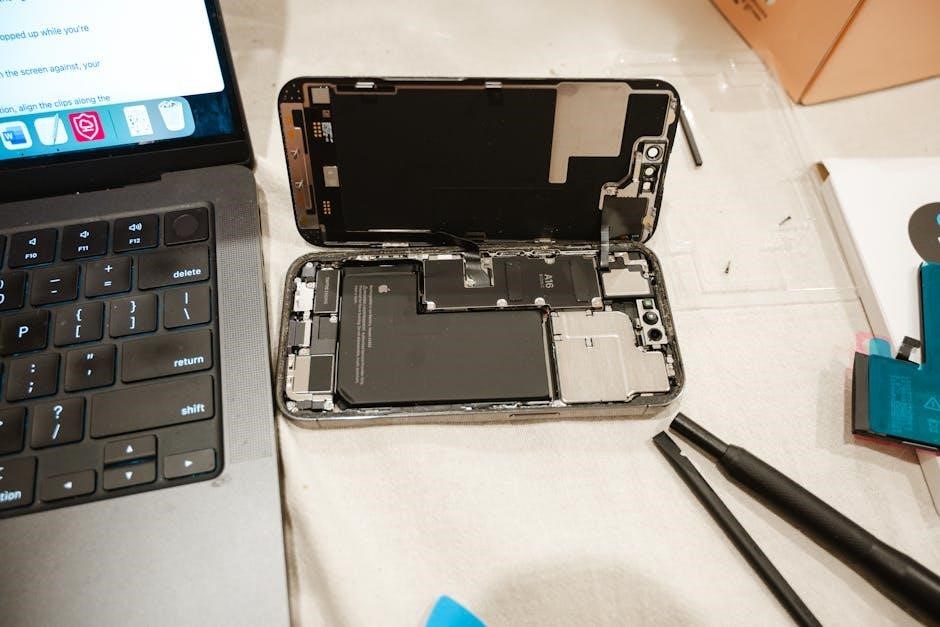
The Everstart battery charger manual PDF details that when charging a removed battery, it’s vital to place it in a well-ventilated area, away from flammable materials. Connect the charger clamps as follows: positive (red) to the positive terminal and negative (black) to the negative terminal. Ensure a secure connection to prevent arcing.
Select the correct voltage and charging rate based on the battery’s specifications, as outlined in the manual. Monitor the charging process closely, observing the LCD display for charge level and status. Avoid overcharging, which can damage the battery. Disconnect the charger before disconnecting the clamps.
The Everstart battery charger manual PDF emphasizes correct cable connection for safe charging. Always connect the red (positive) clamp to the positive terminal of the battery first, then the black (negative) clamp to the vehicle’s chassis or the negative battery terminal. This minimizes sparking.
Ensure clamps have a firm grip, cleaning corroded terminals beforehand for optimal contact. Avoid connecting clamps directly to the negative battery terminal if the battery emits gas. Disconnect in reverse order: black clamp first, then red. Refer to your specific manual for model-specific instructions and diagrams.
Everstart charger manuals PDF stress adequate ventilation during charging, avoiding sparks, and careful handling of corrosive battery acid for user safety;
Everstart battery charger manuals, readily available as PDFs, consistently emphasize the critical importance of charging batteries in a well-ventilated area. This precaution is paramount due to the production of explosive hydrogen gas as a byproduct of the charging process. Insufficient ventilation can lead to a dangerous accumulation of this gas, creating a significant fire or explosion hazard.
The manuals specifically advise against charging batteries in enclosed spaces like garages with closed doors or poorly ventilated basements. Ensure ample airflow by opening windows or utilizing a fan to dissipate the hydrogen gas safely. Always prioritize a well-ventilated environment to mitigate risks and ensure a secure charging experience, as detailed within the Everstart documentation.
Everstart battery charger manuals, often found in PDF format, dedicate significant attention to preventing sparking and short circuits during operation. These occurrences pose substantial risks, potentially damaging the charger, the battery, and even causing personal injury. The manuals instruct users to always connect the charger clamps to the battery terminals before activating the charger.
Disconnect the charger from the power source before disconnecting the clamps from the battery. Avoid allowing the clamps to touch each other or any metallic objects, as this creates a short circuit. Ensure clamps are securely fastened to the terminals to prevent accidental disconnection and sparking. Following these guidelines, detailed in the Everstart documentation, is crucial for safe charging.
Everstart battery charger manuals, accessible as PDFs, emphasize the extreme danger of battery acid – a highly corrosive substance. The documentation stresses wearing appropriate personal protective equipment (PPE), including safety goggles and acid-resistant gloves, when working near a battery. Should acid contact skin or eyes, immediately flush the affected area with copious amounts of water for at least 15 minutes and seek medical attention.
Manuals advise having baking soda readily available to neutralize any acid spills. Avoid contact with clothing, as acid can cause significant damage. Proper ventilation is also recommended, as battery acid can release harmful fumes. Always consult the Everstart manual for specific safety instructions related to your charger model.

Everstart charger manuals in PDF format detail solutions for problems like unrecognized batteries, slow charging, and overheating; consult the troubleshooting section for guidance.
If your Everstart charger fails to recognize a battery, the PDF manual suggests several checks. First, ensure the battery terminals are clean and free of corrosion, as this can impede a proper connection. Verify the battery voltage is within the charger’s compatible range; attempting to charge an incompatible battery will result in non-recognition.
Confirm the cable clamps are securely attached to the correct battery terminals – positive to positive, and negative to negative. A reversed connection can prevent charging initiation. The manual also advises checking the battery’s condition; a severely discharged or damaged battery might not be recognized. Finally, consult the troubleshooting section of the PDF for specific error codes related to battery detection failures.
According to the Everstart charger’s PDF manual, slow or absent charging often stems from inadequate cable connections. Ensure the clamps are firmly attached to clean battery terminals, free from corrosion. Verify the AC power supply is functioning correctly and the charger is plugged into a working outlet.
The manual highlights that a significantly discharged battery will require a longer charging time. If charging commences but is exceptionally slow, the battery may have a reduced capacity or internal damage. Consult the troubleshooting section within the PDF for specific error codes. Finally, confirm the charger’s amperage setting is appropriate for the battery’s size and type.
The Everstart battery charger’s PDF manual explicitly warns against operation in poorly ventilated areas, as this can lead to overheating. Ensure adequate airflow around the unit during charging. Prolonged charging of a fully charged battery is a common cause of overheating; the manual advises disconnecting the charger once the battery reaches full charge.
If the charger becomes excessively hot, immediately disconnect it from both the battery and the power source. Inspect the cooling vents for obstructions and clean them if necessary. A malfunctioning internal component could also be the culprit; consult the troubleshooting section of the manual or contact customer support if overheating persists despite these measures.

Locating the Everstart charger’s PDF manual is easily done through Walmart’s official help resources or comprehensive third-party databases like Manuals+.
Walmart provides direct access to numerous Everstart battery charger manuals through their official help website. This is often the most reliable source for the correct documentation specific to your model. Searching within Walmart’s support pages using the exact model number – such as Everstart Maxx BC50BE or JUS750CE – will yield the corresponding PDF manual.
These resources typically include detailed instructions on charging procedures, safety precautions, troubleshooting guides, and specifications. The advantage of using Walmart’s official site is ensuring the manual is genuine and hasn’t been altered. Furthermore, Walmart’s help section often features FAQs and support articles addressing common issues related to Everstart chargers, supplementing the information found within the PDF manual itself.
Manuals+ is a widely used online database offering a substantial collection of user manuals, including many for Everstart battery chargers. This platform aggregates manuals from various sources, providing a convenient location to search for your specific model’s PDF documentation. Users can easily find manuals like the Everstart Maxx BC4WE or BC40BE by entering the model number into the search bar.
While generally reliable, it’s advisable to cross-reference information found on Manuals+ with the official Walmart resources to ensure accuracy. Manuals+ often includes scanned copies of original manuals, which may occasionally have minor imperfections. However, it remains a valuable resource when the official documentation is unavailable or difficult to locate.
Locating the correct PDF manual hinges on knowing your Everstart charger’s precise model number. This is typically found on a label affixed to the charger itself, often on the back or bottom. Common models include the BC50BE, BC4WE, JUS750CE, and BC40BE. When searching online, input the full model number – for example, “Everstart Maxx BC50BE manual PDF” – into your search engine.
Be precise; variations in model numbers can lead to incorrect manuals. Utilizing the model number significantly narrows the search results, directing you to the appropriate documentation. Remember to check both Walmart’s official help resources and third-party databases like Manuals+ using this specific identifier.
Regular cleaning of terminals and proper storage, as detailed in the Everstart manual PDF, extends the charger’s lifespan and ensures optimal performance.
Maintaining clean charger terminals is vital for a strong electrical connection and efficient charging. The Everstart battery charger manual PDF emphasizes disconnecting the charger from the power source before any cleaning takes place. Use a wire brush or a clean cloth dampened with baking soda and water to remove corrosion from both the charger clamps and the battery terminals.
Ensure all residue is thoroughly rinsed off and dried before reconnecting. Regularly inspecting and cleaning the terminals prevents reduced charging efficiency and potential damage to both the charger and the battery. A clean connection ensures optimal power transfer, contributing to a longer battery life and reliable performance of your Everstart charger.
The Everstart battery charger manual PDF recommends storing the charger in a cool, dry place, away from extreme temperatures and humidity. Before long-term storage, ensure the charger is completely dry and the clamps are clean. Coiling the charging cables loosely prevents damage to the insulation.
Avoid storing the charger directly on a concrete floor or against damp walls. A shelf or a plastic container offers better protection. Regularly checking the stored charger for any signs of corrosion or damage is advisable. Proper storage extends the charger’s lifespan and ensures it’s ready for use when needed, maintaining its functionality and reliability.
The Everstart battery charger manual PDF emphasizes regular maintenance to maximize the charger’s lifespan. Keeping the terminals clean from corrosion, achieved through periodic cleaning with a wire brush, is vital. Avoid dropping or subjecting the charger to physical shocks.
Always allow the charger to cool down completely after extended use before storing it. Inspect the cables for any cracks or damage and replace them if necessary. Following the recommended charging procedures outlined in the manual prevents overheating and strain on the internal components. Proper care ensures years of reliable service from your Everstart charger.
You must be logged in to post a comment.